
 EN
EN
 AR
AR NL
NL FI
FI FR
FR DE
DE IT
IT JA
JA KO
KO PL
PL RU
RU ES
ES LT
LT UK
UK VI
VI HY
HY AZ
AZ KA
KA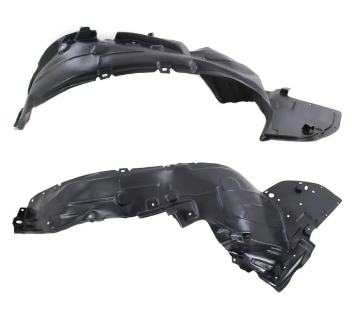
Understanding the Structural Role of Front Fenders in Automotive Design
Beyond Aesthetics: How Front Fenders Contribute to Body Frame Structural Integrity
Fenders aren't just there to make cars look good on paper they actually play a big role in how vehicles hold up structurally. These parts connect right into the main frame of the car at several key spots including the chassis itself, radiator supports, and where the suspension attaches. What this means is that fenders help carry some of the weight and stress across the front part of the vehicle. According to recent crash tests done by NHTSA in 2023, well designed fenders can actually take around 18 percent of impact force away from where passengers sit during collisions. So while people might think fenders are just cosmetic additions, they're really working behind the scenes to keep everyone safer inside the cabin.
- Lateral stiffness: Fenders stabilize wheel housings during cornering forces
- Torsional support: Steel-reinforced designs maintain frame alignment on uneven terrain
- Energy dispersion: Modern aluminum-composite fenders absorb low-speed impact energy before it reaches crumple zones
Engineering Fundamentals: Load Distribution and Stress Absorption During Frontal Impacts
When a car hits something head-on at 25 mph, those front fenders aren't just there for looks they actually help manage how forces spread out during the crash. What happens first is that the impact gets transferred from the outer body panels all the way to the internal support structures. Then comes the intentional bending in specific areas designed to absorb energy called crumple zones. Any leftover force makes its way into the A-pillars and along the floor rails. This whole process of staged energy absorption brings down the maximum G-forces experienced inside the vehicle by around 22% when compared to older models with regular fenders (according to IIHS research from 2023). These days, manufacturers are using better metal blends that let fenders handle up to 3,500 pounds per square inch of shear stress. To put that in perspective, it's like having a 300 pound weight slam into them at 15 miles per hour without damaging other parts of the car's frame.
Integration of Front Fenders with Core Vehicle Frame Structures
Fender Attachment Points and Their Role in Vehicle Frame Importance for Structural Integrity
The front fenders on cars attach to the load bearing parts through carefully designed mounting spots. Modern car bodies usually have around 8 to 12 connection points for each fender, which helps move twisting forces from where the wheels sit down to the main structural beams of the vehicle. A recent report from SAE International found that when manufacturers arrange these bolts just right, it can make roofs much stronger against crushing forces compared to standard setups something like about a quarter better actually. All these connections work together kind of like triangles in engineering, spreading out stress so the car doesn't get damaged as easily when someone takes a sharp turn or gets into an accident.
Structural Continuity: Connection Between Front Fenders, A-Pillars, and Suspension Mounts
The use of laser welded reinforcement panels establishes continuous load paths connecting front fenders, A pillars, and suspension points across the vehicle frame. When it comes to crashworthiness, this design allows fenders themselves to play a role in absorbing impact forces during collisions. According to recent testing from IIHS in 2024, these panels actually take in around 34 percent of the energy from frontal impacts. That's pretty impressive when we consider how much protection they provide too the passenger compartment. In side angle crashes where only part of the front end collides, cabin deformation drops by approximately 18%. The secret lies in those high strength steel gussets placed strategically at critical connection points. These components keep everything aligned properly even when subjected to extreme forces, showing off roughly 2.7 times better durability against repeated stress compared to older spot welding techniques. For automotive engineers looking to build safer vehicles without sacrificing structural rigidity, this represents a significant advancement over conventional methods.
Case Study: Unibody Redesigns in Modern Sedans Emphasizing Fender-Frame Cohesion
The latest advances in unibody construction are all about pushing fender integration deeper into the vehicle frame. When designers manage to extend these parts by around 15 to 20 millimeters, they see some pretty impressive results: crash test scores for small overlap impacts go up by nearly half, while alignment problems after collisions drop by almost a third. Car manufacturers are taking notice too, with most spending between 60 and 70 percent of their front end budget on parts that connect with fenders. Makes sense really since these components serve two purposes at once - looking good on the outside while playing a critical role in keeping passengers safe during accidents.
Front Fenders and Vehicle Safety: Crash Performance and Energy Management
Crash Energy Redirection: The Hidden Function of Reinforced Front Fenders
Front fenders that are reinforced act as barriers when cars collide, helping push the force of crashes away from people inside the vehicle. These aren't just pretty covers anymore though. Today's fenders are made with strong aluminum mixes and special plastic compounds that can soak up about 12 to maybe even 18 percent of the energy from front end crashes before they start bending too much, according to research published last year in Materials Engineering. Computer simulations show these design changes cut down the maximum stress on those critical A-pillar supports and the firewall behind them by around 22% when vehicles hit something at 35 miles per hour speeds. That means better safety for passengers overall during accidents.
NHTSA Insights: Front-End Structure Performance in Low-Speed Collisions
Tests conducted by NHTSA show cars featuring fenders built into their structure suffer around 31% less frame damage during 15 mph crashes compared to models where fenders are just for looks. Research published in Materials Engineering back in 2024 points out that when fenders are attached right to suspension components, they distribute impact forces better by about 19% at lower speeds. No wonder then that most modern safe cars have this design approach. Nearly four out of five vehicles earning the IIHS Top Safety Pick+ rating between 2023 and 2024 actually weld their fenders into crash zones instead of using the old bolt-on method we used to see all over the place.
Evaluating the Role of Vehicle Frame in Car Safety and Performance with Integrated Fenders
Fenders connected to frame rails and bulkheads actually work together to strengthen how cars handle crashes overall. Tests indicate this kind of design cuts down on side-to-side twisting by around 25-30% when drivers suddenly swerve, all while keeping the car body from deforming in unpredictable ways. Most modern automotive designers now rank fender connections right alongside airbag timing calculations when planning for crash protection. After all, these structural links have been shown time and again to make a real difference in protecting people inside during collisions.
Impact of Minor Collisions: Fender Damage and Hidden Structural Risks
Analyzing the impact of fender benders on vehicle frame and alignment
Low speed crashes that just ding the fender can actually create bigger problems than meets the eye. Fenders themselves don't carry much weight in the overall structure, but when they get hit, those connection points to things like radiator supports, A pillars, and frame rails often bend or twist. These kinds of deformations tend to throw off wheel alignment somewhere around plus or minus 1.5 degrees, which according to what mechanics see regularly, can make tires wear down about 40% faster than normal. With today's unibody cars, even a small bump at 5 to 10 miles per hour might stress out suspension components or mess with crumple zones that were meant to handle much harder impacts.
When cosmetic damage masks underlying structural compromise
Surface-level damage like bent fender lips or scratched panels often conceals deeper issues. Collision repair data indicates that 22% of vehicles labeled with cosmetic-only front fender damage actually exhibit:
- Misaligned chassis measurement control points
- Micro-fractures in frame rail junctures
- Displaced ADAS sensor arrays
These hidden defects impair crash energy management and may lead to erratic braking or lane-keeping behavior. Professional diagnostics using 3D measuring systems are essential, as frame deviations under 3mm can still degrade handling and safety margins.
Maintaining and Restoring Structural Integrity Post-Collision
Best practices for maintaining structural integrity through inspections and maintenance
Keeping vehicle structures performing well begins with checking front fenders and their mounting points every six months or so. Look out for those tiny cracks or any signs of bending that might not be obvious at first glance. When tightening those fender bolts, mechanics need to follow what the car maker recommends about torque settings. Most sedans require around 18 to 22 foot pounds of force. Getting this right stops small movements over time that can wear down the metal faster than normal. For cars used in areas where rust is a problem, applying cavity wax inside helps protect against corrosion. Studies from SAE show this cuts oxidation by nearly three quarters, which means joints stay strong longer. Damaged bolts and screws should definitely be swapped out for original equipment manufacturer parts whenever possible. These genuine components distribute weight properly across all connection points, maintaining safety standards throughout the vehicle's life.
Diagnostic tools for assessing frame and fender alignment after front-end damage
Today's auto body shops depend heavily on those fancy 3D measuring systems for checking how far off a fender might be from what the manufacturer originally built it at. Most places aim for around half a millimeter accuracy when aligning panels properly. Then there are these laser alignment gadgets that look at how everything fits together between the fender and the car's suspension setup. If something's out of whack by more than three millimeters, they need to fix it using one of those big frame racks in the back room. Thermal imaging has become pretty common too. Technicians run these infrared cameras over fender supports while simulating real-world loads to spot areas where metal is getting stressed without anyone seeing it. Some studies suggest this technique actually boosts how well crash forces get redirected through the vehicle structure by about a third compared to older methods.
FAQ Section
What are the main functions of front fenders in automotive design?
Front fenders primarily contribute to the vehicle's structural integrity by distributing weight and stress across the front part of the vehicle. They also play a crucial role in crash protection by absorbing and redirecting impact forces.
How do front fenders improve vehicle safety during crashes?
During crashes, front fenders help manage the distribution of forces and absorb impact energy, which reduces stress on other parts of the vehicle and improves passenger safety.
Can minor fender benders affect a car's structural integrity?
Yes, even minor fender benders can affect structural integrity by causing bends or twists at connection points, leading to alignment issues and faster tire wear.
What maintenance practices are recommended for fender integrity?
Regular inspections for cracks or signs of bending, proper torque settings for fender bolts, and the use of protective coatings to prevent corrosion are essential for maintaining fender integrity.
How does advanced technology aid in fender alignment assessments?
Advanced technologies like 3D measuring systems and thermal imaging help assess fender alignment and identify hidden stress areas, aiding in accurate repairs and adjustments post-collision.
Table of Contents
- Understanding the Structural Role of Front Fenders in Automotive Design
- Integration of Front Fenders with Core Vehicle Frame Structures
- Front Fenders and Vehicle Safety: Crash Performance and Energy Management
- Impact of Minor Collisions: Fender Damage and Hidden Structural Risks
- Maintaining and Restoring Structural Integrity Post-Collision
-
FAQ Section
- What are the main functions of front fenders in automotive design?
- How do front fenders improve vehicle safety during crashes?
- Can minor fender benders affect a car's structural integrity?
- What maintenance practices are recommended for fender integrity?
- How does advanced technology aid in fender alignment assessments?