
 EN
EN
 AR
AR NL
NL FI
FI FR
FR DE
DE IT
IT JA
JA KO
KO PL
PL RU
RU ES
ES LT
LT UK
UK VI
VI HY
HY AZ
AZ KA
KA
Global Regulatory Frameworks for Front Fog Lamp Compliance
Overview of regional regulations and compliance for automotive lighting
Getting front fog lamps certified requires navigating different rules across regions. The UN ECE R19 standard covers about 54 countries thanks to those international vehicle agreements we've all heard about. Meanwhile over in North America, things work differently under FMVSS 108 standards, which actually brings in those SAE J583 specs for measuring light output. Down in Southeast Asia it gets even trickier because local authorities tend to mix the ECE intensity limits (around 140k candela give or take) with their own specific color temperature demands. This creates these complicated situations where manufacturers have to jump through multiple hoops just to meet basic safety requirements.
Key differences between FMVSS, UN ECE R19, and SAE standards
| Aspect | FMVSS (US/Canada) | UN ECE R19 (Europe/APAC) | SAE (Global Guidance) |
|---|---|---|---|
| Beam Focus | High-intensity forward projection | Glare-reduced wide dispersion | Adaptive pattern recommendations |
| Mounting Height | 12-30 inches (DOT §393.24) | 9.8-39.3 inches (R19 Clause 6.2) | 16-32 inches (SAE J583) |
| Color Spectrum | 5000K–6500K white only | 4300K–6000K with selective yellow | Amber/white (context-dependent) |
This comparative structure highlights how design parameters must be adapted regionally, particularly in beam control and installation geometry.
The role of UNECE R19 in shaping global front fog lamp requirements
In 2023, the UNECE R19 regulation got updated to eliminate those minimum light level requirements and instead added new rules about how headlights should shape their beams dynamically when driving in bad weather. This change is starting to make waves across the automotive world since it affects around 78 percent of all cars exported globally. Car manufacturers are now rushing to install these modular LED light systems because they need to satisfy two main standards at once: R19 wants a 55 degree spread horizontally while FMVSS requires a vertical brightness peak of 3000 candelas. What we're seeing here isn't just about better headlights though. The whole auto industry is moving toward lights that can adjust themselves based on what's happening outside the car window, whether that means rain, fog or anything else that makes visibility tough.
Comparative analysis of fog lamp usage regulations (DOT, ECE, SAE)
The FMVSS 108 standard allows drivers to use fog lamps at the same time as their low beam headlights. Things get different in areas following ECE regulations though, where these fog lamps must automatically turn off once speeds go over 40 kilometers per hour to prevent blinding other road users. Looking at what SAE suggests, they actually set a limit for fog light brightness too. Their guidelines say fog lights shouldn't produce more than about 2.1 percent of what the main headlights put out. This seems pretty reasonable since it balances making sure drivers can see with not creating dangerous glare situations. There's still some problems getting all these standards to work together properly. Recent testing has found that roughly two thirds of lamps certified for both systems don't hold up well against heat stress tests required by SAE J583 when exposed to the moisture conditions specified in ECE rules. These findings highlight real issues with how durable products are across different international standards.
FMVSS and North American Certification for Front Fog Lamp
FMVSS for Lighting Systems: Applicability to Front Fog Lamps in the US
Front fog lamps in America need to follow Federal Motor Vehicle Safety Standard 108 rules whether they come from the factory or get added later. These regulations exist so car lights actually help drivers see better without blinding others on the road. The standards set pretty tough requirements for how bright the lights should be, where they point, and how long they last under normal driving conditions. Looking at the official FMVSS 108 documents shows that makers have to prove their fog lights emit somewhere between 500 to 1,200 candela of light intensity. Plus, the spread of the light beam can't go wider than 45 degrees when measured horizontally across the road surface. This helps keep the light focused where it matters most for safe driving in poor weather conditions.
Beam Angle, Intensity, and Mounting Height Specifications Under DOT Rules
The Department of Transportation enforces precise installation and performance rules:
- Vertical positioning: 12–30 inches above ground
- Horizontal placement: At least 16 inches from the vehicle centerline
- Light intensity: 550–700 candela at designated test points
Lamps mounted above 30 inches risk violating FMVSS 108’s anti-glare provisions, as confirmed by NHTSA’s 2023 enforcement review. Proper alignment is critical to avoid compromising road safety and triggering regulatory penalties.
Photometric Testing of Lighting Systems for Compliance With FMVSS 108
Certification requires third-party testing using goniophotometers to measure light distribution across 22 angular points defined in FMVSS 108. Devices must maintain ±15% intensity tolerance and feature a sharp horizontal cutoff to minimize upward light projection. Notably, 23% of aftermarket lamps fail UV exposure or vibration tests, underscoring weaknesses in current durability certification practices.
Canadian Vehicle Lighting Regulations and Alignment With US and ECE Standards
The Canadian CMVSS 108 standard basically follows the same guidelines as the US FMVSS 108 regulations, though it incorporates some features from the UN ECE R19 standards too. For instance, Canadian rules actually permit those yellow fog lights that many people find so annoying on the road. The light measurements still stick to the same ±15% tolerance range we see elsewhere, but there's more flexibility when it comes to where these lights can be mounted on vehicles, ranging from about 14 to 31 inches off the ground. This approach brings Canadian requirements closer to what's common across Europe. From a manufacturer standpoint, this mixed system makes life easier for companies trying to sell cars in both North American markets without having to completely redesign their lighting systems for each country.
UN ECE Regulation No. 19 and European Front Fog Lamp Standards
Design and construction requirements for front fog lamps under UN ECE R19
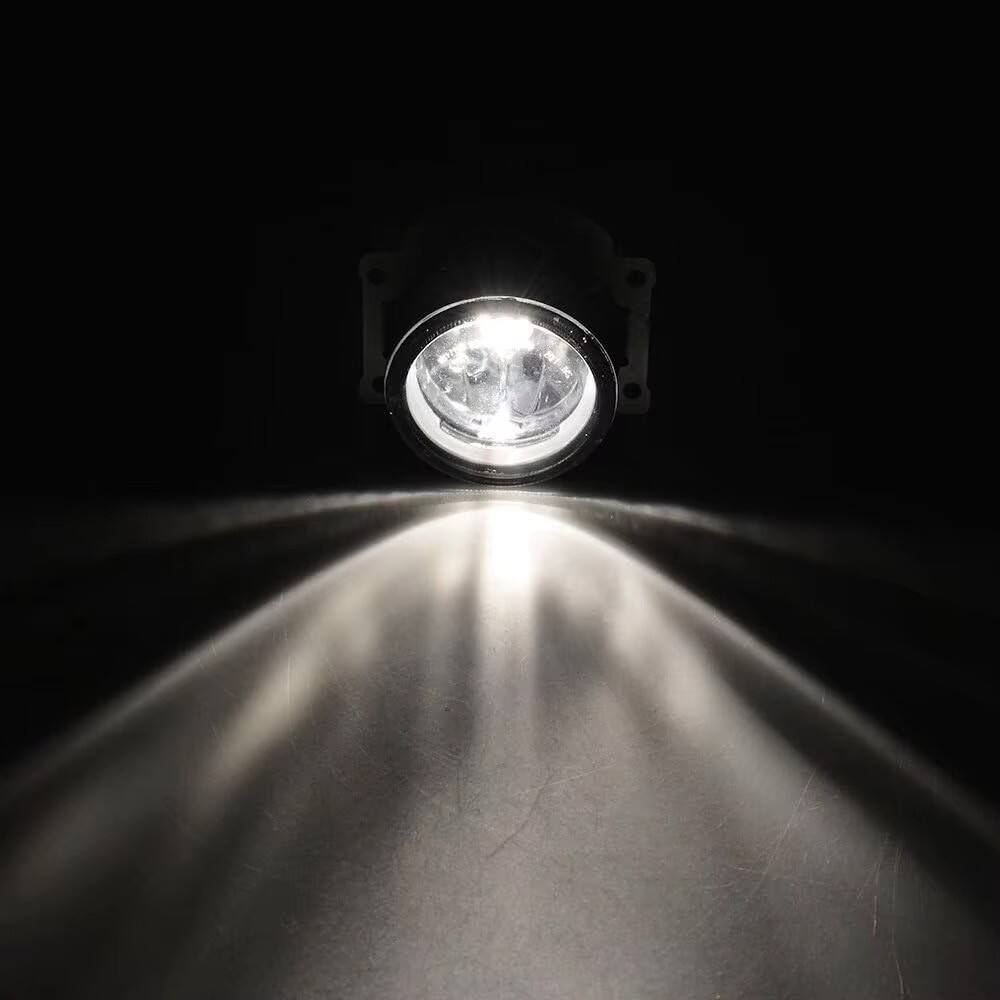
The UN ECE Regulation number 19 lays down pretty strict design rules for fog lamps so they can light up the road surface somewhere between 20 and 50 meters ahead without causing glare for other drivers on the road. These lamps need to survive four whole hours of vibration tests at frequencies going up to 28 Hz, plus work properly across a wide temperature range from as cold as minus 40 degrees Celsius all the way to scorching 85 degrees Celsius. When it comes to installation, there's a maximum height limit of 250 millimeters above the ground level, and the horizontal alignment needs to be spot on with no more than plus or minus five degrees deviation. This helps keep them pointing correctly even when visibility drops dramatically because of bad weather conditions.
Classes of front fog lamps: Differences between Class B and Class F3
| Feature | Class B (Basic) | Class F3 (Advanced) |
|---|---|---|
| Beam Spread | 70° horizontal | 90° horizontal |
| Intensity Range | 800–1,200 candela | 1,500–2,500 candela |
| Usage Context | Urban roads (<50 km/h) | High-speed highways |
Class F3 models require integrated anti-dazzle shielding, whereas Class B units may use simpler reflector-based optics, offering cost-effective solutions for lower-speed applications.
Light color requirements: White and selective yellow in ECE-compliant lamps
ECE R19 allows white (4,300K–5,000K) or selective yellow (2,200K–3,000K) outputs, with chromaticity strictly controlled within a 0.01 tolerance in the CIE 1931 color space. A 2024 photometric study found that yellow-tinted lamps improve visual contrast by 40% in fog compared to white variants, reinforcing their continued relevance in certain driving environments.
Integration of UN ECE R19 into Regulation No. 149: Implications for manufacturers
Regulation number 149 brings together the existing R19 fog lamp regulations with those for adaptive front lighting systems. The new rule requires headlights to adjust their beams in real time according to what sensors detect. Car makers are facing some challenges here because they now need to run these 200 cycle tests on all the motorized parts that control the lights. Certification costs have gone up quite a bit too, somewhere between eighteen thousand and twenty five thousand dollars for each different car model. Putting these systems together represents something big for the industry though. We're moving closer to having headlights that actually respond to road conditions as they happen rather than just staying fixed in one position.
Case Study: European OEM adaptation to revised ECE photometric standards
Following the 2023 update to ECE photometric thresholds, three major European suppliers redesigned 78% of their fog lamp housings within 18 months. By adopting a multi-region certification strategy that leveraged shared testing protocols between ECE and FMVSS jurisdictions, they reduced compliance costs by 32%, demonstrating the value of coordinated regulatory planning.
Testing, Durability, and Environmental Performance of Front Fog Lamp
Test procedures for vehicle lighting systems: Vibration, moisture, and UV resistance
Front fog lamps undergo comprehensive environmental validation, including MIL-STD-810G vibration testing (30Hz–2,000Hz), IP67 waterproofing verification (submersion at 1m for 30 minutes), and accelerated UV aging simulating five years of sunlight exposure. Leading manufacturers report less than 5% lumen depreciation after 3,000 hours of weathering, according to SAE International (2024).
Photometric consistency and material durability in extreme environments
When materials go through extreme temperature changes from minus 40 degrees Celsius all the way up to 85 degrees, certain weaknesses become apparent. Polycarbonate housing tends to deform around 18 percent more than die cast aluminum when subjected to these stresses. Fog lamps face another challenge during cold weather too. At temperatures below freezing point, specifically around minus 20 degrees Celsius, these lamps experience roughly a 12 percent decrease in brightness compared to what they produce on dry days. This points directly to why proper thermal management systems matter so much for automotive components. Getting the optics right becomes critical work for engineers trying to meet those tough standards outlined in SAE J583-2024 specification.
Industry Paradox: Balancing cost efficiency with rigorous certification testing
Certifying a single lamp variant across global markets can exceed $740,000 in testing costs (Frost & Sullivan 2023). To manage expenses, 23% of manufacturers utilize shared validation platforms, reducing compliance expenditures by up to 40%. However, this approach increases homologation risks due to inconsistent regional interpretations of test results.
Controversy Analysis: Aftermarket fog lamps and regulatory gray zones
A 2024 Global Aftermarket Lighting Report revealed that 62% of aftermarket front fog lamps fail ECE R19 beam pattern requirements. With no unified enforcement mechanism for retrofit installations, these non-compliant units pose safety risks and create regulatory ambiguity, especially in regions where consumer demand outpaces oversight.
Strategic Market Entry: Navigating Multi-Region Front Fog Lamp Certification
Harmonization Challenges in Regional Certification Compliance for Vehicle Lighting
The differences in photometric requirements, mounting specifications, and how these systems actually operate according to FMVSS, UN ECE R19, and SAE J583 standards really push manufacturers to spend a lot on redesigning their products. Take the vertical beam patterns as an example there's about a plus or minus 3 degree difference between what's required in the US versus Europe, which means car makers need special adjustable mounts just to meet both sets of rules. According to a recent industry poll from last year, around two thirds of suppliers are shelling out more than seven hundred forty thousand dollars every single year just to tweak their lighting systems so they work across different markets. These numbers highlight just how costly it gets when regulations aren't aligned properly around the world.
Certification and Aftermarket Regulations for Lighting Devices in North America
The FMVSS 108 regulation limits how bright front fog lamps can be, setting a maximum of 0.7 lux at 10 meters distance while also banning any light shining upwards. Even with these restrictions in place, there has been a noticeable spike in after market fog lamp installations over recent years. Statistics show around 42 percent growth since 2022, mainly because people want to upgrade their vehicles with LED systems. However many of these LED retrofits don't actually comply with the standards they're supposed to follow. Canada takes things one step further with its own version called CMVSS 108.1 which includes special tests for performance in extreme cold conditions down to minus 40 degrees Celsius. This makes Canadian requirements somewhat different from those in the United States, although overall they still closely resemble the American FMVSS 108 guidelines.
Strategic Approaches for Multi-Region Front Fog Lamp Market Entry
Top manufacturers employ three key strategies:
- Modular optical designs with interchangeable lenses and reflectors for rapid regional customization
- Pre-certification through accredited labs like TÜV Nord to accelerate approvals
- Digital twin simulations that cut physical prototyping costs by 57% (SAE 2023)
A phased market entry approach—prioritizing EU, then North America, followed by ASEAN—can shorten time-to-market by 6–8 months. Research shows that companies combining adaptive beam technology with multi-standard compliance achieve 31% higher market share than those focused on single-region sales.
FAQ
What are the main differences between FMVSS, UN ECE R19, and SAE standards?
FMVSS standards (primarily used in North America) focus on high-intensity forward projection, while UN ECE R19 (common in Europe and APAC) emphasizes glare-reduced wide dispersion. SAE offers global guidance with adaptive pattern recommendations.
How do regional standards affect the design of front fog lamps?
Regional standards dictate specific parameters such as beam focus, mounting height, and color spectrum, requiring manufacturers to adapt design elements like beam control and installation geometry to comply with local regulations.
What changes were introduced in the 2023 update of UNECE R19 regulation?
The 2023 update to UNECE R19 eliminated minimum light level requirements and introduced dynamic beam shaping rules for driving in bad weather, impacting car manufacturers globally.
Are there differences in the usage regulations of fog lamps among DOT, ECE, and SAE?
Yes, FMVSS 108 allows concurrent use of fog lamps with low beam headlights, while ECE regulations require automatic fog lamp deactivation above 40 km/h. SAE suggests limits on fog light brightness to avoid glare.
How do FMVSS 108 regulations affect front fog lamps in North America?
FMVSS 108 sets strict rules for light brightness, beam angle, and mounting height, enforcing that fog lamps emit between 500-1,200 candela of light intensity and restricting beam spread to no wider than 45 degrees.
Table of Contents
- Global Regulatory Frameworks for Front Fog Lamp Compliance
- FMVSS and North American Certification for Front Fog Lamp
-
UN ECE Regulation No. 19 and European Front Fog Lamp Standards
- Design and construction requirements for front fog lamps under UN ECE R19
- Classes of front fog lamps: Differences between Class B and Class F3
- Light color requirements: White and selective yellow in ECE-compliant lamps
- Integration of UN ECE R19 into Regulation No. 149: Implications for manufacturers
- Case Study: European OEM adaptation to revised ECE photometric standards
-
Testing, Durability, and Environmental Performance of Front Fog Lamp
- Test procedures for vehicle lighting systems: Vibration, moisture, and UV resistance
- Photometric consistency and material durability in extreme environments
- Industry Paradox: Balancing cost efficiency with rigorous certification testing
- Controversy Analysis: Aftermarket fog lamps and regulatory gray zones
- Strategic Market Entry: Navigating Multi-Region Front Fog Lamp Certification
-
FAQ
- What are the main differences between FMVSS, UN ECE R19, and SAE standards?
- How do regional standards affect the design of front fog lamps?
- What changes were introduced in the 2023 update of UNECE R19 regulation?
- Are there differences in the usage regulations of fog lamps among DOT, ECE, and SAE?
- How do FMVSS 108 regulations affect front fog lamps in North America?